

Drysuit care and maintenance guide
A good drysuit is a significant investment, and with the right care and maintenance, it can provide many years of reliable service. Whether you use your drysuit for dinghy sailing, kayaking, paddleboarding or other watersports, a few simple maintenance habits can help extend its life and reduce the likelihood of leaks and expensive repairs.
Salt water, sand, sunlight, perspiration and incorrect storage can all contribute to the deterioration of drysuit fabrics, waterproof zips and seals.
In this guide, we explain how to clean, dry, maintain and store your drysuit correctly, as well as how to identify common problems before they become more serious.
Drysuit Care at a Glance
| Maintenance | Our recommendation | Read more |
|---|---|---|
| Cleaning | Rinse with fresh water after every use | How? ↓ |
| Drying | Dry thoroughly inside and out, away from direct heat | How? ↓ |
| Waterproof zips | Keep clean and use the correct specialist lubricant | How? ↓ |
| Latex seals | Protect from sunlight, oils and excessive stretching | How? ↓ |
| Neoprene seals | Rinse, dry and inspect regularly | How? ↓ |
| Drysuit socks | Protect against abrasion, punctures and grit | How? ↓ |
| Storage | Store clean and dry without sharply folding the zip | How? ↓ |
| Leaks and repairs | Investigate persistent wetness and repair damage promptly | How? ↓ |
How to Clean Your Drysuit After Use
One of the simplest and most effective ways to extend the life of your drysuit is to rinse it after every session, particularly if you have been using it in salt water.
Salt crystals, sand and dirt can accumulate around waterproof zips, seals and seams, potentially causing premature wear.
After Every Watersports Session
- Rinse the outside of your drysuit thoroughly with clean, fresh water.
- Pay particular attention to waterproof zips, neck seals, wrist seals and socks.
- Remove any sand, mud or debris from around adjustable cuffs and reinforced panels.
- Rinse the inside when necessary to remove perspiration and accumulated dirt.
- Allow the suit to dry thoroughly before storing it.
Even if you have been sailing or paddling on fresh water, rinsing your drysuit is still a good habit, particularly if it has been exposed to mud, algae or other contaminants.
Maintaining the Breathability of Your Drysuit
Regular cleaning is particularly important for breathable drysuits. Salt deposits, fine particles, silt, mud, body oils and perspiration can accumulate within the fabric and reduce its ability to transfer moisture vapour away from your body.
Over time, a contaminated breathable fabric can become considerably less effective, causing perspiration and condensation to build up inside the suit. This can leave you feeling damp and cold, even though the drysuit remains waterproof.
This is particularly relevant for sailors and kayakers who regularly use their drysuits in salt water, muddy estuaries, rivers and shallow coastal waters.
Thoroughly rinsing your drysuit with fresh water after every use and periodically washing it with a suitable technical clothing cleaner can help maintain its breathability and overall performance.
If your breathable drysuit no longer seems as breathable as it once was, it may simply need a thorough clean rather than replacing.
Can You Wash a Drysuit in a Washing Machine?
Unless the manufacturer specifically states that machine washing is suitable, it is best to wash your drysuit by hand.
Use lukewarm water and, when required, a specialist cleaning product suitable for waterproof technical clothing and compatible with the suit’s materials and seals.
Avoid ordinary detergents, fabric softeners, bleach and aggressive cleaning products, as these may damage waterproof fabrics, seals or protective coatings.
Always follow the cleaning instructions supplied by your drysuit manufacturer.
Keep your technical clothing performing
Shop cleaning and reproofing products · Shop drysuit repair and care products
Always check that your chosen cleaning product is suitable for your particular drysuit.
How to Dry a Drysuit Properly
Storing a damp drysuit can lead to unpleasant odours, mould and mildew. Drying your suit properly after use is therefore an important part of routine maintenance.
- Hang the drysuit in a well-ventilated area using a suitable wide hanger or the manufacturer’s recommended method.
- Allow the inside and outside of the suit to dry completely.
- Keep it away from radiators, heaters and other direct heat sources.
- Avoid prolonged exposure to direct sunlight.
- Do not tumble dry unless specifically permitted by the manufacturer.
If the inside of your drysuit is damp from perspiration, carefully turning it inside out, where the design allows, can help improve airflow and speed up drying.
Take particular care not to place unnecessary strain on latex seals, integrated socks or waterproof zips when turning the suit inside out.
How to Look After Your Drysuit Zip
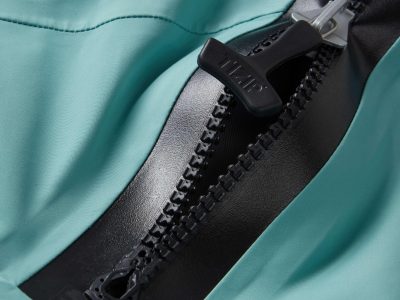
The waterproof entry zip is one of the most important and potentially expensive components of a drysuit. A damaged or poorly maintained zip can allow water to enter the suit and may require specialist replacement.
Modern drysuits typically use either metal-toothed waterproof zips or flexible plastic waterproof zips. Each type has different maintenance requirements.
Cleaning a Waterproof Drysuit Zip
After use, rinse the zip with fresh water to remove salt, sand and dirt. If necessary, use a soft brush to gently remove debris, following the manufacturer’s recommendations.
Never force a zip that feels difficult to open or close. Check for trapped fabric, dirt or other obstructions before attempting to move it again.
Lubricating a Metal Drysuit Zip
Traditional metal-toothed waterproof zips may require periodic lubrication using a suitable specialist zip wax or lubricant.
Apply the recommended product sparingly and according to the zip manufacturer’s instructions. Regular maintenance can help keep the zip operating smoothly and reduce unnecessary strain.
Lubricating a Plastic Waterproof Zip
Flexible plastic waterproof zips, such as those found on many modern watersports drysuits, may require a different lubricant and application method.
Some designs require lubrication primarily around the docking or closing end of the zip rather than along its entire length.
Always identify your zip type and use the lubricant recommended by the manufacturer. Do not assume that a product suitable for a metal zip is also suitable for a plastic zip.
Common Drysuit Zip Mistakes
- Forcing a stiff or obstructed zip.
- Pulling the zip at an awkward angle.
- Allowing sand or salt crystals to accumulate.
- Using unsuitable oils, grease or household lubricants.
- Folding the suit sharply across the waterproof zip.
- Trapping thermal clothing in the zip when closing it.
Before entering the water, always check that the waterproof zip is fully closed and correctly seated.
How to Care for Latex Drysuit Seals
Latex neck and wrist seals provide a close-fitting barrier against water ingress. However, latex is a natural material that gradually deteriorates over time, even when the drysuit is not being used regularly.
Exposure to sunlight, heat, ozone, oils and certain chemicals can accelerate this deterioration.
Putting On and Removing Latex Seals
- Remove watches, rings and sharp jewellery before putting on your drysuit.
- Take care not to catch the latex with your fingernails.
- Gently stretch the seal using your fingers rather than pulling on one small section.
- Avoid excessive force when passing your hands or head through the seals.
- Use a manufacturer-approved seal dressing aid if required.
Protecting Latex Seals
Rinse latex seals with fresh water after use and allow them to dry naturally. Avoid contact with petroleum-based products, solvents and unsuitable oils or creams.
Specialist latex seal care products may help maintain the condition of the material when approved by the drysuit manufacturer.
Store the suit away from direct sunlight, excessive heat and ozone-producing equipment such as certain electric motors.
Signs That Latex Seals Need Replacing
- Visible cracks or small splits.
- Loss of elasticity.
- Sticky or unusually soft areas.
- Brittle or hardened material.
- Seals that no longer fit closely against the skin.
- Repeated water ingress around the neck or wrists.
Latex seals are replaceable on many drysuits, so a damaged seal does not necessarily mean that the entire suit needs replacing.
How to Care for Neoprene Drysuit Seals
Neoprene neck and wrist seals are popular on many dinghy sailing drysuits and recreational watersports drysuits because of their comfort and flexibility.
Although neoprene seals are generally less susceptible to tearing during normal handling than latex, they still require regular care.
- Rinse with fresh water after use.
- Allow the neoprene to dry completely.
- Avoid excessive stretching when putting on or removing the suit.
- Keep seals away from direct heat and prolonged sunlight.
- Check for damaged stitching, splits and worn sealing surfaces.
Do not use latex-specific treatment products on neoprene unless the manufacturer confirms they are suitable.
Latex or neoprene seals?
Read our complete drysuit buying guide for more advice on choosing between different seal materials, waterproof zips and drysuit designs.
Protecting Your Drysuit Socks
Integrated latex or waterproof fabric socks are particularly vulnerable to damage because they are exposed to repeated movement and friction inside watersports footwear.
Small punctures and abrasion can allow water into the feet of an otherwise waterproof drysuit.
How to Protect Latex Drysuit Socks
Latex socks can be damaged by rough surfaces, sharp objects and excessive friction when putting on boots.
A protective drysuit oversock worn over the latex can help your feet slide more easily into your footwear and reduce abrasion.
How to Protect Fabric Drysuit Socks
Waterproof breathable fabric socks are popular on modern drysuits because they are generally easier to slide into watersports boots than latex socks. However, they are still susceptible to abrasion and punctures, particularly if dirt or sand becomes trapped inside your footwear.
One characteristic of breathable fabric socks is that your feet can sometimes feel damp after prolonged use, particularly when wearing neoprene watersports boots that retain water.
As you walk around, the repeated pressure of your feet against the water trapped inside your boots can place considerable localised pressure on the waterproof fabric. Under certain conditions, this may contribute to moisture passing through the fabric, particularly if it is worn or damaged.
Perspiration and condensation can also contribute to this damp feeling, so damp feet do not necessarily indicate that your drysuit socks have a puncture or failed seam.
To help minimise these problems:
- Choose suitable watersports footwear that allows excess water to drain.
- Avoid excessively tight-fitting boots.
- Keep the inside of your boots free from sand, grit and dirt.
- Wear moisture-wicking thermal socks inside your drysuit.
- Regularly rinse your drysuit socks and footwear with fresh water.
- Inspect the fabric socks for signs of abrasion and wear.
If your feet consistently become wet, rather than slightly damp, it is worth having the socks professionally leak tested.
Never Walk on Unprotected Drysuit Socks
Integrated drysuit socks are not designed to be used as footwear. Walking across a boat park, beach, slipway or other rough surface without suitable boots can quickly cause damage.
Always use appropriate protective footwear and consider standing on a changing mat when putting on or removing your drysuit.
Protect your drysuit socks with suitable footwear
Shop dinghy sailing boots · Shop neoprene watersports boots
For more advice on footwear, read our dinghy sailing boots buying guide or our wetsuit boots buying guide.
How to Store a Drysuit Correctly
Correct storage is particularly important if your drysuit is only used during the winter months and spends much of the year unused.
Before putting your drysuit away for an extended period, make sure it is clean, completely dry and in good condition.
- Store in a cool, dry and well-ventilated location.
- Keep away from direct sunlight and excessive heat.
- Avoid storing underneath heavy equipment.
- Do not fold sharply across waterproof zips or seals.
- Avoid prolonged compression in a tightly packed kit bag.
- Follow the manufacturer’s recommendations for hanging or loosely rolling the suit.
Different waterproof zip designs have different storage requirements. Check whether your manufacturer recommends storing the zip open or closed rather than applying the same rule to every drysuit.
Why Is My Drysuit Wet Inside?
Finding moisture inside your drysuit does not automatically mean that the suit is leaking. Perspiration and condensation can accumulate inside even a breathable drysuit, particularly during strenuous activity.
However, repeated wet patches in the same location may indicate a problem that requires investigation.
Common Causes of Water Ingress
- Damaged or poorly fitting neck and wrist seals.
- A waterproof zip that has not been fully closed.
- Dirt or damage affecting the waterproof zip.
- Punctures in integrated socks.
- Small tears or abrasion damage to the suit fabric.
- Damaged or deteriorating seam tape.
- Thermal clothing trapped underneath a seal.
If your thermal clothing is consistently wet in one particular area, inspect the corresponding section of the drysuit for visible damage.
For persistent or difficult-to-identify leaks, a professional drysuit pressure test can help locate the source of the problem.
Could your thermal clothing be contributing to dampness?
Choosing suitable moisture-wicking base layers can help manage perspiration inside your drysuit. Read our guide to what to wear under a drysuit for more advice.
Can a Drysuit Be Repaired?
Many common drysuit problems can be repaired, potentially extending the life of the suit considerably.
Depending on the construction and overall condition of the drysuit, possible repairs include:
- Replacement latex neck seals.
- Replacement wrist seals.
- Replacement latex or fabric socks.
- Waterproof zip replacement.
- Repairs to small punctures or tears.
- Seam and seam tape repairs.
Minor fabric damage may be repairable using a compatible specialist waterproof repair product. However, the correct repair method depends on the material and construction of the suit.
Waterproof zip replacement, extensive seam damage and major fabric repairs are generally best handled by a specialist drysuit repair service.
If you suspect that your drysuit is leaking or has suffered significant damage, have it repaired and checked before relying on it for cold-water protection.
Drysuit repair and maintenance essentials
Drysuit repair and care · Repair kits · Repair tapes and glues
Check product compatibility with your drysuit fabric before attempting any repairs.
When Should You Replace Your Drysuit?
There is no fixed lifespan for a drysuit. Its useful life depends on how frequently it is used, the conditions it is exposed to, its construction and how well it is maintained.
Replacing individual seals or socks can often be more economical than buying a new suit. However, widespread fabric deterioration, extensive seam failure or multiple expensive repairs may make replacement a more practical option.
If your drysuit is approaching the end of its useful life, browse our range of watersports drysuits for modern alternatives.
Looking for a replacement drysuit?
Dinghy drysuits · Kayaking drysuits · Women’s drysuits · Kids’ drysuits
Not sure whether to replace your drysuit with another drysuit or a modern wetsuit system? Read Are Drysuits Still Better Than Wetsuits in Winter?
Preparing Your Drysuit for the Winter Season
If your drysuit has been stored away throughout the summer, inspect it well before your first winter session.
- Check the neck and wrist seals for deterioration.
- Inspect the integrated socks for visible damage.
- Check the operation and condition of the waterproof zip.
- Inspect seams, reinforced panels and high-wear areas.
- Try the suit on with your usual winter thermal layers.
- Arrange any necessary repairs or leak testing before returning to the water.
Checking your equipment early gives you time to arrange repairs rather than discovering a problem just before a sailing event or paddling trip.
Get your winter clothing ready
Drysuit Maintenance Checklist
After Every Use
- Rinse with fresh water.
- Remove dirt and sand from zips and seals.
- Dry thoroughly before storage.
Regularly Throughout the Season
- Inspect neck seals, wrist seals and socks.
- Check and maintain waterproof zips as recommended.
- Inspect high-wear areas for abrasion and damage.
- Check for signs of water ingress.
At the End of the Season
- Thoroughly clean and dry the suit.
- Inspect all seals, seams, socks and zips.
- Arrange any necessary repairs.
- Store correctly until the next season.
Frequently Asked Questions
Should I rinse my drysuit after every use?
Yes. Rinsing with fresh water helps remove salt, dirt and other contaminants that can contribute to premature wear. It is particularly important after use in salt water.
Can I use WD-40 on a drysuit zip?
No. Use only a specialist lubricant approved for your particular waterproof zip. Household oils and penetrating lubricants may be unsuitable for the zip and surrounding materials.
How long do latex drysuit seals last?
The lifespan of latex seals varies considerably depending on use, storage and exposure to sunlight, heat and chemicals. Inspect them regularly rather than relying on a fixed replacement interval.
Can I replace drysuit seals myself?
Some drysuits feature replaceable seal systems, while others require specialist adhesives and fitting techniques. If you are unfamiliar with the repair process, professional replacement is recommended to ensure the integrity of the suit.
Should I store my drysuit with the zip open or closed?
This depends on the type of waterproof zip fitted to your drysuit. Always follow the manufacturer’s storage recommendations and avoid placing unnecessary stress on the zip.
Can a drysuit lose its waterproofing over time?
Yes. Abrasion, punctures, seam deterioration and damage to waterproof fabrics can all affect performance over time. Regular maintenance and timely repairs can help extend the useful life of the suit.
Can a breathable drysuit lose its breathability?
Yes. Salt deposits, silt, fine particles, body oils and other contaminants can accumulate within the fabric and reduce its ability to transfer moisture vapour. Regular rinsing and periodic cleaning with a suitable technical clothing cleaner can help maintain the performance of a breathable drysuit.
Why do my feet feel damp inside my drysuit?
Damp feet can be caused by perspiration, condensation, water ingress or the repeated pressure of water trapped inside your watersports boots against breathable fabric socks. Slight dampness does not necessarily mean that your drysuit is leaking, although persistent wetness should be investigated.
Get the Most From Your Drysuit
Looking after your drysuit does not need to be complicated. Regular rinsing, careful drying, appropriate zip maintenance and correct storage can make a significant difference to its longevity.
Taking a few extra minutes to care for your equipment after each session can help prevent avoidable damage and reduce the need for expensive repairs.
At Coast Water Sports, we offer drysuits and watersports equipment for dinghy sailing, kayaking, paddleboarding and other activities.
Keep your drysuit in top condition
Shop drysuit repair and care · Shop drysuit socks · Shop drysuit accessories
Explore our full range of drysuits and dinghy sailing drysuits, or contact our team for advice on choosing your next suit.